Latest News
Diving Club - Java Institute
Exploring the underwater world using specialized equipment, such as scuba gear, is known as underwater diving. Scuba diving enables divers to breathe underwater, allowing them to stay submerged for extended periods and explore the aquatic environment. There are various types of underwater diving, including recreational, technical, and commercial diving. Recreational diving is the most popular type of diving, undertaken for leisure purposes, such as exploring coral reefs or shipwrecks. Technical diving involves advanced equipment and training and is typically done to explore deeper or more challenging dive sites. Commercial diving is done for professional purposes, such as underwater construction or maintenance.
Proper training and certification, as well as specialized equipment such as wetsuits, tanks, regulators, and fins, are required for underwater diving. It also necessitates a strong understanding of safety procedures and skills such as buoyancy control, equalization, and underwater communication. Underwater diving can be an exciting and rewarding experience, offering divers a unique perspective on the underwater world and a sense of exploration and adventure.
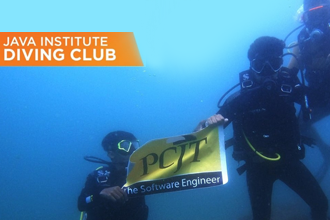
The Java Institute diving club, based in the Unawatuna area, guides children to obtain PADI certification for safe and professional-level diving. Interested children can join the club without prior knowledge, and PADI-certified trainers provide training from basic to advanced levels.
Rock Abseiling Club - Java Institute
Rock abseiling, also known as rappelling, is a thrilling sport that involves descending steep rock faces or cliffs using specialized equipment and ropes. Unlike rock climbing, which involves ascending a rock face, abseiling entails a controlled descent down the rock face using a rope and harness system. A harness is worn by the participant and attached to a rope, which is anchored to a secure point at the top of the cliff or rock face. The participant then lowers themselves down the rock face, controlling the speed of their descent using the rope and braking devices. Abseiling can be performed both indoors and outdoors and is commonly used in adventure sports. Proper safety training and equipment, as well as strength, balance, and skill, are required to perform abseiling.
The Java Institute Rock Abseiling club provides a safe opportunity to enjoy rock abseiling. The club conducts systematic training from beginner to advanced levels.

Karate Club - Java Institute
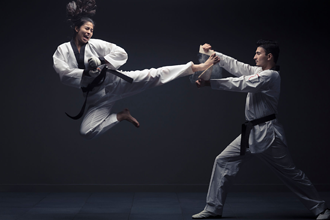
Karate is a martial art that originated in Okinawa, Japan, and is now practiced all over the world. It involves a combination of strikes, kicks, and blocks, as well as throws and joint locks, with the ultimate goal of self-defense. Karate practitioners also focus on mental discipline, including aspects such as respect, focus, and perseverance. Karate is practiced both individually and in groups, and there are various styles and organizations that teach and compete in the sport. It is a popular sport for both recreation and competition, with many practitioners striving to achieve black belt status through rigorous training and testing. Karate is also an Olympic sport.
Mr. Neel Rajapaksha is an accomplished Head Master of the Java Institute Karate Club with a wealth of experience in the field. He holds a Diploma in Exercise and Sport Sciences from the Faculty of Medicine at the University of Peradeniya, Sri Lanka.
As the Branch Chief of the Hokushin Karate Association, Mr. Rajapaksha holds a 5th Dan Black Belt from the Japan Karate Federation, where he also serves as a Referee Control Member. He has participated in numerous karate championships, including the World Karate Championship in 1991, where he showcased his exceptional skills and techniques. Apart from his impressive achievements in karate, Mr. Rajapaksha is also a National Tour Guide Lecturer, where he shares his knowledge and passion for Sri Lanka's rich cultural heritage with visitors from around the world. With his extensive experience and expertise, Mr. Rajapaksha is a highly sought-after coach in the field of karate. He inspires and motivates his students to develop their skills and reach their full potential, making a lasting impact on their lives both on and off the mat.
In addition to regular training sessions, our organization also arranges diverse events and programs throughout the year. These events comprise workshops, seminars, and competitions, which provide opportunities for learners to acquire knowledge from experienced mentors and other practitioners, compete, and demonstrate their abilities. We also actively participate in community service events and charity fundraisers to contribute to society and propagate the positive influence of martial arts.
Sepak Takraw Club - Java Institute
Sepak Takraw, also known as kick volleyball, is a sport that originated in Southeast Asia and is now played worldwide. It is played with a rattan ball and is similar to volleyball, but players use their feet, knees, chest, and head to pass the ball over a net to the opposing team, with the objective of making it touch the ground on their opponent's side. Sepak Takraw can be played individually or in teams, and requires physical agility, coordination, and quick reflexes. It is often played recreationally as well as competitively, with various tournaments and events held globally. Sepak Takraw has gained popularity in recent years, especially in countries such as Thailand, Malaysia, and Indonesia.
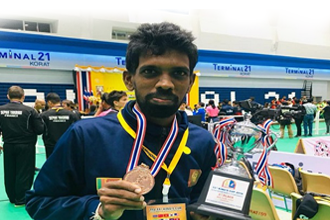
Mr. K.K.I Srimal, the head coach of the Java Institute Sepak takraw team, was a former coach for both the Army and National Sepak takraw teams in Sri Lanka. He also represented both teams as a player and served as the former captain. Mr. SriMal holds a Bachelor's degree in Software Engineering and a Master's degree in Reading. He has completed various coaching and referee courses, including the India Coaches Course level 1.
At the international level, Mr. Srimal has achieved several accolades, including securing 2nd place in the 26th King's Cup World Championship in Thailand in 2011 and 3rd place in the 29th King's Cup World Championship in 2014. He has also participated in various South Asian Sepak Takraw championships, achieving double 3rd place in 2012 in Nepal and 3rd place in 2016 in Myanmar. In national competitions, Mr. Srimal has won several first and second places in Regu and Double categories between 2016 and 2021.
Java Institute partners with CodeGen to provide industrial placements for students
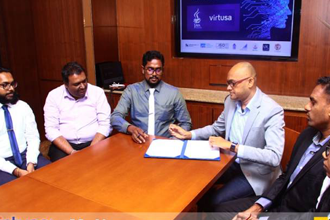
It was yet another momentous occasion on the 7th of March, when the CEO of Java Institute, Dr. Nirodha Rupasinghe (third left), Mr. Tharaka Pathum (second left), Head of Advanced Technology and Mrs. Narmada Harischandra (third left), Senior lecturer, visited CodeGen International and met with Mr. Heshan Karunaratne - Director Business Development (center), Mr. Nimalka Lucas - Director Delivery (3rd right), and Mr Mohamed Shirazi - Director Delivery (2nd right) and Ms. Shenika Herath - Director HR (4th right) and signed an MoU as an official industry partner of the Java Institute. This partnership enables Java Institute graduates opportunities for internships and begin careers at CodeGen as software engineering professionals.

Head of International to discuss the next steps of the historic partnership between the two organizations
Today was yet another historic milestone as the CEO of UK Awards, Mr. John Kerr, met with CEO of Java Institute, Dr. Nirodha Rupasinghe (left), Ms. Senuri Siribaddan, General Manager and Mr. Mevan Wickramasinghe, Head of International to discuss the next steps of the historic partnership between the two organizations.

Java Institute represented at the Meet and greet for CPO of Virtusa
Java Institute represented at the Meet and greet for CPO of Virtusa - 24th February, 2022.
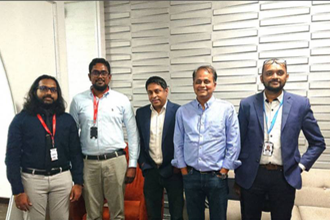
Dr. Nirodha Rupasinghe, CEO of the Java Institute and Mr. Tharaka Pathum Sankalpa, Director - Java Robotics Intelligent System Research Center and Senior lecturer attended the special meet and greet organized by Virtusa with Mr. Sundararajan Narayanan, EVP & Chief People Officer at Virtusa held on the 24th of February 2022.
Mr. Narayan addressed the gathering and explained that Virtusa with a workforce of 33,000 software engineers is expected to expand that number within the next 4 years and emphasized the importance of Sri Lankan universities to focus on identifying industry requirements and updating curricula to fit these requirements. Mr. Narayan further stated that Virtusa would be offering trainings and workshops in order to facilitate this process.
Addressing the meeting, Dr. Rupasinghe explained that the degree programmes offered by the Java Institute, namely the BSc in Software Engineering top up degree, validated by Birmingham City University, and the four year BEng in Software Engineering with over 600+ credits, had been developed to address these requirements and concluded his presentation by noting that in order to develop full-stack software engineers, such as the PCJT Software Engineer programmes requires a radical shift from the traditional framework of most universities and should not limit the subjects being taught and should instead make all subjects compulsory, as this is the key to developing a stronger, more qualified software engineers.
The event was also attended by Naresha Supramanian, SVP & Head of Asia Pacific and Sampath Thrimavithana, Head of HR - Virtusa Sri Lanka and a renowned Data Scientist.
About Sundararajan Narayanan
Sundararajan Narayanan is the Chief People Officer of Virtusa and he oversees all high-level HRM-related functions of the corporation at an international scale. Specifically, he overseas talent acquisition, talent management, leadership development, and global immigration while focusing on facilitating a digital-ready environment for Virtusa.
Group photograph caption
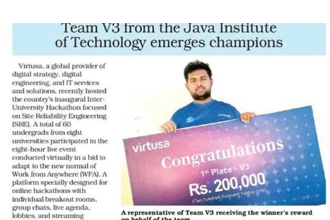
Ice Breaker Gajaba 2022 - Subaru Legacy 2000 cc Event
Ice Breaker Gajaba 2022 - Subaru Legacy 2000 cc Event
PCJT Brand Maker
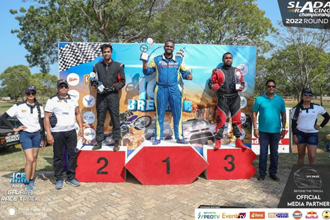
ICE BREAKER SLADA CHAMPIONSHIP 2022
New member of PCJTRacing Subaru Legacy performing at ICE BREAKER SLADA CHAMPIONSHIP 2022

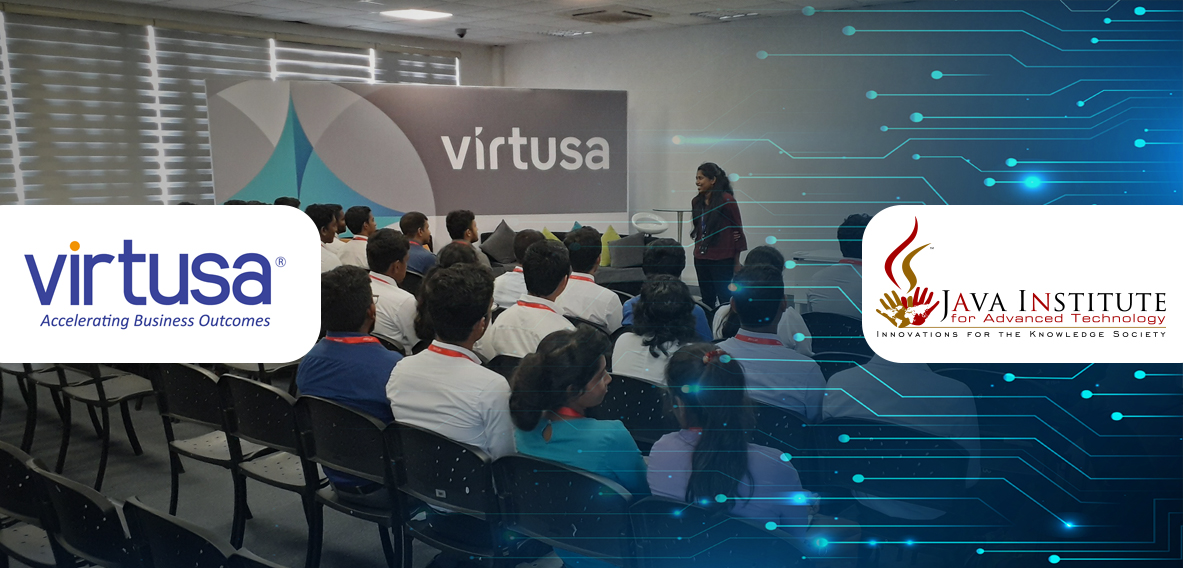
Saw the ceremonious event of Virtusa Open Day for the early-2022 period
The 19th of January, 2022, saw the ceremonious event of Virtusa?s Open Day for the early-2022 period. Held at the premises of Virtusa?s office in Colombo, the event saw the participation of a number of distinguished guests as well as undergraduates. Representing Virtusa, Mr. Sampath Thrimavithana, the Human Resources Leader for Sri Lanka within Virtusa, was the key figure who graced the event on behalf of Virtusa. Other key members of Virtusa arrived and took part in this event.
The Open Day was a significant event as this was held immediately after a historic MOU between Virtusa and the Java Institute for Advanced Technology. On behalf of the Java Institute, the key members who took part in this event included Dr. Nirodha Rupasinghe (CEO), Mr. Tharaka Pathum (Head of Advanced Technology), Miss Senuri Siribaddana (General Manager), and Kanchana Lakmali (Department of Examinations).

A historic collaborative partnership between the Java Institute for Advanced Technology and Virtusa was finalized - 2022
A historic collaborative partnership between the Java Institute for Advanced Technology and Virtusa was finalized on the 18th of January, 2022. The event was focused on the signing of an MOU between the two reputed organizations where the reputed IT services organization Virtusa would enroll graduates of the Java Institute as employees. The mutual collaboration and history between Virtusa and the Java Institute extends back several years.
The ceremonious event was held at the Flow Hall of the Hilton Residences Colombo hotel from 3:00 PM to 5:00 PM. The event saw the participation of a number of distinguished guests as well as undergraduates. Mr. Sampath Thrimavithana, an HR Leader within Virtusa, was the key figure who graced the event on behalf of Virtusa. Other key members of Virtusa arrived and took part in this event.
The keynote speech delivered by Mr. Sampath touched on various topics, including the global reach of Virtusa, its employee pool, and its cross-industrial service range.
On behalf of the Java Institute, Dr. Ishantha Siribaddana, the founder and Chairman of the institute, graced the event. He delivered a key speech and talked about the value of the institute, its academic process, and its achievement.
Dr. Nirodha Rupasinghe - CEO of the Java Institute, Mr. Mevan Wickramasinghe - Head of International Affairs, and Mr. Tharaka Pathum - Head of Advanced Tachnology gave the other speeches.
Subsequently, the databases of previous and current students, including graduates, of the Java Institute were handed over to Virtusa.